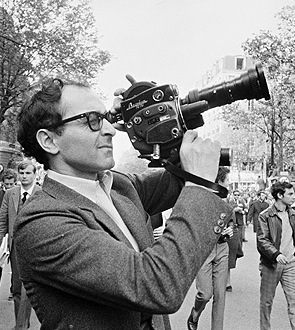
The French New wave is seen as the beginning of the new wave, an artistic movement whose influence on film has been as profound and enduring as that of surrealism or cubism on painting. The birth of the ‘auteur’ and the rise of the ‘camera stylo’ The french used the camera as a pen and the film as a pad of paper. The french new wave began a trend of the new wave and lots of things in the french new wave-influenced this across the world. Lots of the first New Wave directors were very young and would have been their first film. They visualised a cultural revolution. Labelled in the late 50’s early 60’s as films kept the same as everything else in culture was changing. The New Wave changed film into an art form and made it an art form. Cameras were becoming lighter and cheaper and the youth took this upon themselves and created the French New Wave on their own.
The British New Wave:
New Wave films are unique and distinctive. They were very different from mainstream films at the time. They were not looking for mainstream success. They would have had a massive cultural impact on different youths and societies. It was more about a message rather than appealing to the mainstream audience. The best films are a personal artistic expression and should bear a stamp of personal authorship. The British New Wave lasted around 5 years and was heavily influenced by the French New Wave. All of the films in the British New Wave had small casts and small crews. This was due to the filmmakers having not a lot of budget and or crew to help make their films. This didn't stop them as the New Wave was considered to be very low budget and more grounded in reality, the narrative also faced very taboo subjects as they wanted to break from the mainstream and be different. It was an exploration of the contemporary that would reflect what is happening at the time. This would some times be counter-cultural as the filmmakers would want to break out of the mainstream. The actors used in these films would have been non-professional actors and paid a very little amount. This gave some of the filming more authentic as the subjects weren't 'Hollywoodised' and glossy as the actors sometimes would be been candid. Due to the style of filming being very new there weren't any laws in place for permits so filmmakers would film wherever they please, this allowed for more creative freedom.

Techniques of sound:
Sound is handled differently in a new wave for many reasons, one of the main ones was the budget. Directors didn't have the money to purchase good sound equipment, lots of the sound would have been caught through cheap equipment. Another reason would have been for artistic reasons. The audio would have been muffled and distorted due to the low budget. The sound that they would have used is direct, this means when the sound is taken directly from the set and not changed in post. Some directors would have got their hands on what's called a Nagra which is an audio recorder that would sync automatically with the visuals. This would have been a rare occurrence as they were very expensive to purchase. The soundtrack for films in the British new wave would have all been modern and relevant at the time. This would be to keep the content grounded in the culture at the time while offering a different perspective on British life.

Techniques of editing:
Editing in the 1960s would have been very minimal due to the technology limitations, along with this the directors didn't let this limit their creativity. Sticking with the theme of standing out of the mainstream they wanted to break the rules of traditional editing. The final cut of a new wave film may look like a draft due to the jarring jump cuts that may not have had any motivation, this was done just to stand out rather than have a purpose. Along with this lots of flash pans would have been used. In the traditional film, your editing should be invisible and not noticeable to the viewer. New wave does the opposite and makes you realise the editing and appreciate it. They completely disregarded the 'normal editing' style. During some of the films, there will be montages to show the passing of time, this is something that A Taste of Honey did when Joe and her mum went to Liverpool. There were elements of montage with the modern soundtrack playing, quick editing and very minimal dialogue. The camera in some shots will sometimes do rapid zooming or look away from the action, this was done to show the audience that they are watching a film. Zooming in and out without a purpose was common in new wave especially French.

The techniques of filming in the new wave have specific traits that new wave directors will follow. The majority of filming is experimental as they wanted to stand out from the mainstream. The new wave saturated the market of filming, through these techniques the press recognised the filmmaking skills at the time and didn't go unnoticed. These techniques vary from alternative framing and self-reference. One of the main things that stand out the most in new wave cinema is mistakes being made but keeping them in the final cut. This added a layer of realism and made viewers realise that it’s just a fantasy. Alongside this natural lighting was always used, no additional lighting would be used as the budget would have been very limited. When filming use of the tripod would have been only used when needed. Handheld footage would have been hard at the time due to the weight of the camera and technology limitations. Shooting people in the street without their consent was something that filmmakers would have expected in their films as there weren’t any laws at the time against the freedom of filming.
A Taste Of Honey notes:
In conclusion, this film shows the younger generation could have had these living conditions. The film showcases the harsh reality of living in Britain at a young age without the preferred upbringing. The subjects that the film tackles such as racism and living alone at a young age makes the film authentic to the time it was filmed in. The gritty realism of the film and taboo subject matter would have made audiences at the time feel uncomfortable viewing. The themes that the film tackle were harsh realities for some people living in Britain in the 1960s. The story tackles a story that sympathises with the minority and makes their story heard. The film is loosely based off of some harsh realities that some people had to live.
Review the institutional context of the creative media and evaluate its influence on production, Analyse the reception of creative media products, Present research on the production and reception of creative media products clearly, Correctly follow relevant conventions for presenting research outcomes, A range of material has been sourced and research is presented in a clear and logical way.
Alfie notes:
- Focuses on taboo subjects and about a woman that dates with lots of men
- Focuses on a child growing up with a mum that is a bad influence from the beginning
- Traditional dissolves in between shots
- The score reflects the mood of the main character very well
- Music is a key component
- Joe's mother's behaviour is reflected in Joe's actions
- When Joe goes on the boat with the stranger she doesn't realise that he could hurt him
- Joe's mother is a bad influence on her as she is kissing an older man
- Joe uses her innocence against the man that she kissed to get out of sleeping with him
- The taboo subject of a 17-year-old girl seeing older men is the main subject of the film
- The age of consent at the time of the film was 21 and it was only lowered in 1994 to 18. During the film, she is 17 years old.
- Both characters seem to be content with their relationship not realising how wrong it is
- The man buys her a ring after only seeing her for a couple of days
- Joe acts older than her age, this is from her mother's poor upbringing, she speaks to men a lot older than she is and she is rude to people
- She dresses a lot older for how old she is (leaving to go to Liverpool)
- The Liverpool sequence is almost like a slowed down montage with the loud music and things with no dialogue
- Montage wasn't something that was done often in cinema at the time and this was very experimental for the time
- Mothers in the 1960s were respected by the family and weren’t talked back to from their children, this film shows a different side to children in the 1960s which at the time would have been a taboo subject.
- Although Joe acts like she is older she doesn't realise how much responsibility she has to have if she were an adult
- She opens up to her boyfriend and says that she isn't experienced yet she acts like she does
- The morning after they kissed and slept together Joe looks to be more attached to her boyfriend more than ever
- Although it's not been directly told to the viewer that they have had sex it is eluded to through her facial expressions and lingering shots on her and her boyfriend
- The very long shots of her watching her boyfriend leave imply that she loves him, at the time it would have left the viewer uncomfortable as this was unheard of in the film
- Although she may have had sex she doesn't fully understand the consequences of sex
- Joe's mum explains how her dad was the first person she had sex with and that the first time is always the best
- In the 1920's sex before marriage was something that was followed even if you weren’t a Christian, it was more of an unwritten rule
- In Joe's new job she is speaking of moving out after her mother is going to marry her boyfriend. Joe has been left by herself at 17 to live alone, this will influence her to become closer to her boyfriend as her mother isn't there to stop her
- This enforces some of the topics that wouldn't have been covered in mainstream films, the new wave wanted to showcase some realities that some people had to endure
- The mainstream films presented a hyper-reality rather than a grounded one that the new wave films offer
- Joe is unaware of safety as she invites someone that she met by selling him shoes into her new house
- This shows her innocence and lack of upbringing from her mother
- Joe is becoming her mother at a young age by letting boys staying around her house
- Although having a boyfriend that is away for a few months Joe lets boys stay around her house for the night and overly friendly towards boys she has only known for a day
- Jeffery staying round Joe's house strengthens their relationship and gets them closer
- Another montage sequence is used to pass time between Jeff and Joe living together
- Joe reveals to the viewer that she is pregnant and she doesn’t want to have the baby as she thinks abortions are wrong, young mothers, especially at the age of 17 when it was illegal to have a baby, is a very taboo subject
- Although she is only 17 she is acting like she is her mother even though she isn't living with Joe
- There's a sibling bond between Joe and Jeff but Jeff feels like he wants something more than a friendship
- Joe realises that having a baby is the wrong decision, she realises that she has taken it too far and doesn't want the baby
- Joe's mother is oblivious to the fact that her daughter is having a baby and living in a house that wasn't hers
- Joe's attitude towards her mother is exactly how she is to her, Joe is exactly like her mother was when she was younger
- "would you like a cigarette," her mother says this to her daughter when she knows that she is pregnant, Joe is hesitant to take it but does in the end and saves it for later
- The realisation of her potentially having a black baby makes her mother worry for her as racism was still a prominent problem it was only in 2010 the equality act became legalised
- The film ends with the same song that it began with to bring it to an end.
A Taste of Honey Q and A:
Review the institutional context of the creative media and evaluate its influence on production, Analyse the reception of creative media products, Present research on the production and reception of creative media products clearly, Correctly follow relevant conventions for presenting research outcomes, A range of material has been sourced and research is presented in a clear and logical way.
Alfie notes:
- Breaking the fourth wall
- Narrating to the audience looking at the camera
- Lots of long shots
- Not a lot of cuts
- In colour not black and white
- Lots of fourth wall breaking and talking to the viewer
With this film, Michael Caine, who plays the title role, moves into the select class of top international stars. His low-key style, his immobile face, his deliberately flat voice, all seem to work against the role of an invincible bird hunter, even birds of a generally rather pitiful sort. It is Caine's success that he uses all these negatives to create a positive, a screen personality of compelling interest and impact.
Shelley Winters is in briefly, but forcefully, as one of the ladies who fall for Caine, although she gets her own back when she later shows him the door. Vivien Merchant is achingly pathetic as the woman who must undergo the illegal operation. Miss Merchant is a prime candidate for a best-supporting actress of the year. Millicent Martin, Julia Foster, Jane Asher and Shirley Anne Field do very well as other of Caine's conquests. Denholm Elliott is vivid in a sequence as the abortionist.

In conclusion, Alfie was a film that was very unique for its time as the constant use of breaking the fourth wall was used all the time. It made the film more interesting to watch as you constantly know what the main character was thinking.
In conclusion, Alfie was a film that was very unique for its time as the constant use of breaking the fourth wall was used all the time. It made the film more interesting to watch as you constantly know what the main character was thinking.
Saturday night Sunday morning:

In a Nottingham factory, Arthur Seaton works in a mindless haze, but his weekends are even more muddled due to his love affairs and his alcohol problem. One of the women Arthur is involved with, Brenda, is married to his coworker, but pregnant with Arthur's child. Meanwhile, Arthur is also pursuing Doreen. Soon enough, he is found out by Brenda, who wants money or an abortion, and Arthur finds himself at a crossroads.
Saturday Night Sunday morning:
Saturday night Sunday morning is about someone having a one night stand and a night out with someone. The story is very simple but keeps the viewer engaged. There are plenty of themes that could be relatable to some viewers, these concepts make the main character relatable and you start to sympathise with him. Although the simple narrative the viewer can connect with the protagonist through some of his actions even if they can sometimes be bad.
After reading some reviews I noticed that people said that although sharing the same name as the stage play it is different and unique in its own way. The differences that are explored in the film are interesting and make sense in the narrative. Described as a revaluation for its time it has become a staple of the time for the British new wave at the time.
Here’s a review that I felt expressed my opinions the most:
“In 1960, in a small Black Country town, I went to see this movie, with a male friend, at our local fleapit - it was a revelation. I found myself in a cinema that was a real setting for what appeared on the screen, for there Albert Finney was, not represented, was the working class bloke that sat in the picture house near to me. Equally I knew that, on leaving, I would see his aunt (Hilda Baker) in the local chippy, and that Norman Rossington would be cycling to some nearby canal to fish. Indeed when Ben (my friend) and I left we went to our local for a quick pint and, I swear,we both had the uncanny feeling of being part of the film. Time has passed and the working class East and West Midlands have change completely so it may not have such resonance for a new generation but if you want to know what a good slice of England looked and sounded like in the 1950s you should see it: it's better than any documentary. Indeed it is a great film” - Cassandra M
Overall the film was a good reflection of the people of the time because it has a very relatable story and is extremely stylised.
| Referencing: - BFI Screenonline: British New Wave
|